The Teacher
Bodhicitta
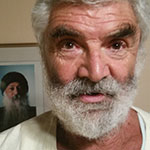
A seeker, a scientist, a sannyasin. For over four decades, carrying the assignment Osho gave him — to bring the Bardo teachings into the modern age.
Bodhicitta
The Journey
From New York to the Himalayas
Bodhicitta grew up in New York City and studied Medicine at Columbia University. As a professor in a medical school teaching social psychiatry, he was surrounded by Nobel Prize winners and the leaders of psychiatry, anthropology, sociology, and several other disciplines in America. Yet he had not met any of those he wanted to be like when he grew up.
In the early 1970s, a series of three extraordinary nights changed everything. Sitting in bed, visions of all the people in his life older than himself passed before him, and he knew they were going to die. He wept intermittently for three hours. The second night, the same thing happened with people his own age. The third night, his children and all the younger people he knew.
Two days later, wading into the ocean at Long Island Sound, he burst into tears and realized: “I am going to die.” This started his meditative search in earnest.
The Search
Exploring Every Tradition
Over the following years, Bodhicitta explored the available meditative traditions — Arica, mindfulness, Sufism, Tibetan Buddhism. He played bass in a rock band, was a stoner, did hatha yoga for several years. His life was in profound upheaval. The Limits to Growth had convinced him that mankind was headed for mass extinction, and nobody was paying attention.
One day his yoga teacher came back with a new name — Ma Dhyan Siddhi — and introduced him to Osho. His marriage was falling apart. On a retreat at the Tail of the Tiger, a Buddhist ashram in Vermont, he met the late Chogyam Trungpa, looked at him and said, “You're not my guru.” Trungpa said, “That's right.”
Two days later the thought floated down: “Surrender to Osho.” I've never looked back since. But I've continued to look as deep as I could.
He took sannyas in Pune in 1976 and participated in many groups. After two years in Rajneeshpuram, he spent the next thirty years with Osho's disciple Yog Chinmaya in Nepal, Pune, and the foothills of the Indian Himalayas, and was also close to Veeresh and Kaveesha.
A Brush with Death
Struck by Lightning
In 1986 in Pokhara, Nepal, Bodhicitta was struck by lightning. He turned blue, stopped breathing, and had no pulse for a couple of minutes. His recollection of that time was being in a dark calm space, and all his memories tumbled out as though somebody had upset a filing cabinet. Then a voice or presence conveyed to him:
“You have not finished Osho's work in this life.”
After receiving the Bardo teachings from Thrangu Rinpoche in Kathmandu that year, he did the 49-day Bardo retreat, visualizing deities and mumbling mantras. At the end of it, a revealing exchange occurred:
I asked Thrangu, “Do you have any memories of the period between death and rebirth?” He said, “No.” Then I asked, “Do you know anybody who has any memories of that interval?” He said, “No.” Then I asked him, “How do you know what you are teaching me is true?” He said, “I trust my teachers.”
This encounter deepened Bodhicitta's conviction that something more was needed — not just trust in lineage, but direct experience. This became the driving force of his work with the Bardo Mystery School.
The Present
Carrying the Transmission
Now at 89, Bodhicitta continues the work Osho entrusted to him. He has spent over a decade reviewing all the traditional Bardo teachings alongside the ancient Sumerian, Egyptian, Chinese, Indian, and Mesoamerican ideas of the afterlife. But he has resisted producing a simple intellectual summary.
“I don't want to just do a cut and paste intellectual job on the update of Bardo teachings. I want to wait until I have some authentic experience. Osho told me 40 years ago to update the Bardo teachings and I haven't done it yet because nothing new has come to me. My meditation is getting more and more silent and mysterious.”
His meeting with Prem Doug, whose conscious death experience in Pune in 1979 became a pivotal piece of the puzzle, opened new doors in understanding. Doug's direct experience — bypassing the traditional Bardo visions entirely and dissolving directly into vast awareness — aligned perfectly with Osho's teaching that a silent mind dissolves into the infinite.
The conversation between Bodhicitta and Doug, rooted in experience, inquiry, and living transmission, continues in workshops and intimate gatherings. Bodhicitta, Veetman, and Maneesha all carry the energy, and their presence in these workshops is itself a transmission.
“Our contemporary version of the traditional practices is to remember Osho's presence, in whatever form or formlessness it comes to your mind. This remembrance of the presence will connect you with the mysterious universal force. There is no more to do than to rest in that remembrance.”
— Bodhicitta