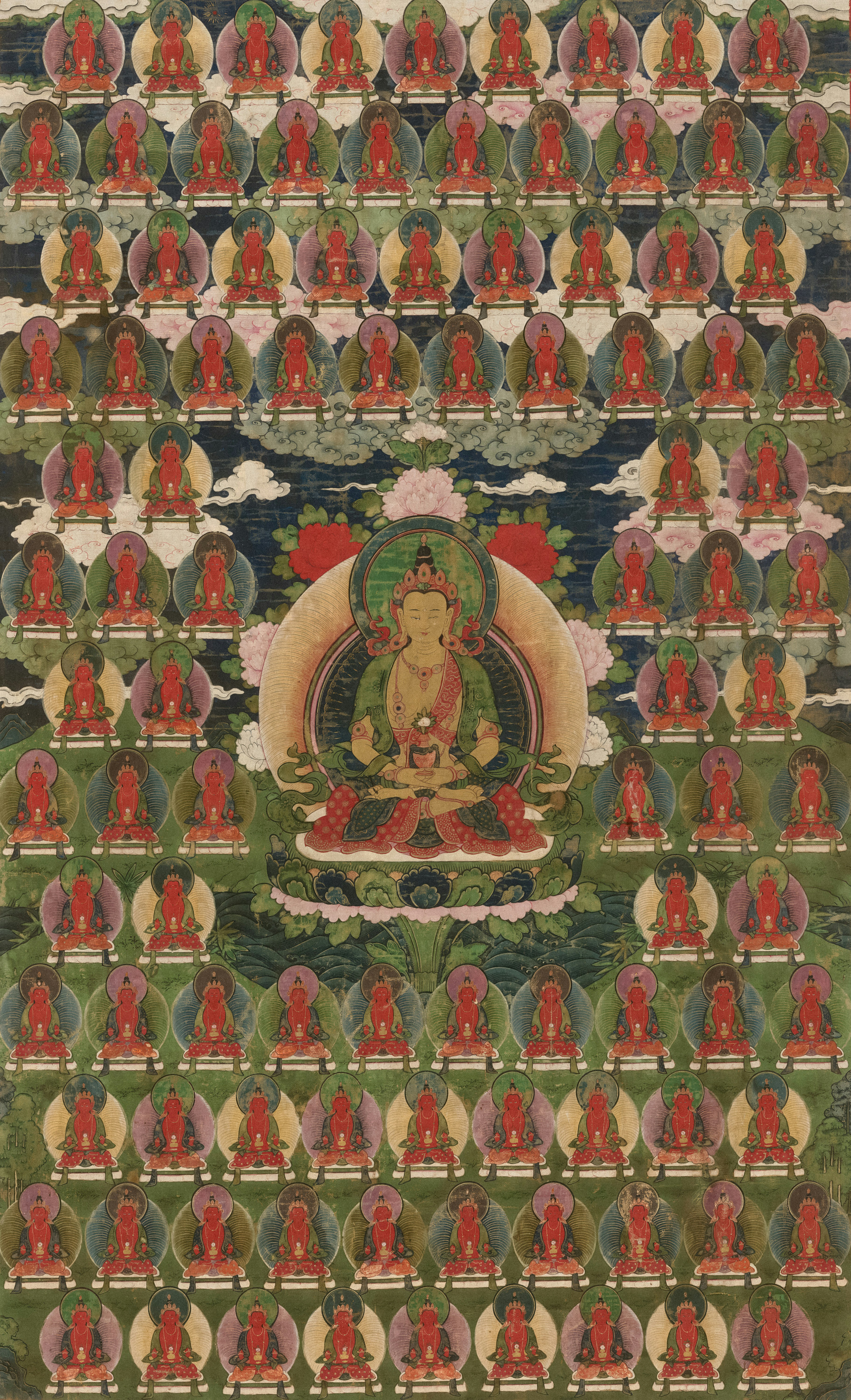
The Teachings
What is the Bardo?
Bardo means “intermediate state.” The teachings map the journey of consciousness through six bardos — from waking life to death and beyond.
Both Osho and Tibetan Buddhism tell us over and over that what we think is being awake is a dreamlike construction of our minds, intermixed with inputs from all our senses, our conditionings from both this life and past lives, and the many invisible energies from the many layers of unconscious and superconscious mind.
The Bardo teachings are the distillation and essence of what to do when you start to ask “what's it all about.” They are said to have been transmitted by Mahaguru Padmasambhava in the eighth century, passed on to his disciples and refined by many enlightened teachers since.
The Origin
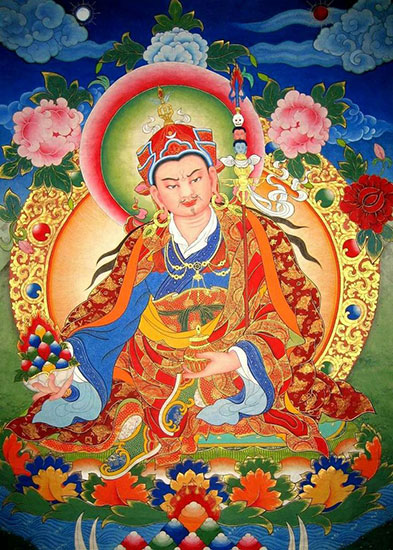
Padmasambhava
Also known as Guru Rinpoche, Padmasambhava brought the Bardo teachings to Tibet in the eighth century. These teachings are inextricably bound up in the matrix of Tibetan culture and have been refined by many enlightened teachers across the centuries.
All Buddhist traditions, especially Tibetan Buddhism, have intensive and extensive practices to prepare for a conscious death, and failing that, choosing an auspicious rebirth. The Tibetans call this body of wisdom the Bardo Thodol — “Liberation Through Hearing in the Intermediate State.”
The Map
The Six Bardos
All six bardos are considered dreamlike constructions of the mind. We cannot know reality until we wake up, become enlightened, see things as they really are.
The Bardo of Waking Life
Our ordinary, everyday experience. The Buddhist teaching is that even this 'waking' state is dreamlike — a construction of mind, senses, and conditioning.
The Bardo of Dreaming
The state of sleep and dreams. In both traditions, dream practice is a way to develop the awareness that carries through into death and beyond.
The Bardo of Meditation
The state entered through meditation practice. Here one touches the luminous, empty, blissful watchfulness that is the actual nature of mind.
The Bardo of Dying
The moment of death itself. At this point, a vast space opens. If you can relax into it, you will know your original face — the Tibetans call this the Clear Light.
The Bardo of Dharmata
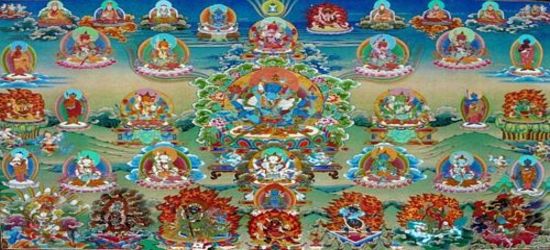
After death, the peaceful and wrathful deities are shown. If you recognize these as projections of your own mind, liberation is possible. This is the domain of the golden light.
The Bardo of Becoming
Preparing for a new birth. The pull toward reincarnation is felt as desire and fear. One is told to remember the presence of the master and rest in that remembrance.
A Radical Difference
Osho's Approach
Osho modified and embedded many of the traditional Bardo teachings in his radical new formulation of the New Man. The essential continuity is: be as conscious as possible during the period between birth and death, whether awake, dreaming, asleep, or meditating.
The radical difference is that our main practice is to tune in on our unfolding individuality and be aware of it while leading an ostensibly ordinary life. This is in contrast to the extensive ritualistic, monastic, and ascetic practices of all Tibetan sects.
If you feel like falling in love and having sex with a new person every year or so, the Tibetans would say: don't do it; perform lots of mantras and visualizations; more retreats. Osho would say: follow your feelings; have as many lovers as you fall in love with; don't take it too seriously or personally; and be as aware as possible of the emptiness that's inextricably bound up with the dream you're living out.
The Five Building Blocks
Bodhicitta describes five essential building blocks of Osho's path:
- 1
Take sannyas and remember Osho's presence as continuously as possible.
- 2
Do one of the active cathartic meditations every day until you don't need that anymore. Supplement with groups — Mystic Rose, Path of Love, Tantra.
- 3
Be as mindful and as loving as possible while watching your life unfold. Remember you are happening, not the doer doing. You are the witness, not the movie.
- 4
Enjoy the support and brotherhood of the sangha. Don't get hung up on labels. Follow your feelings and trust yourself.
- 5
Listen to an Osho discourse daily. Relax, and allow yourself to hear the gaps, the silences around and in-between the words.
The Essence
Recognizing the Clear Light
At the moment of death, the first thing that happens is a vast space opens. If you can relax into it, you will know your original face. The Tibetans call this the Clear Light. It's not light like a lamp. It's spaciousness, pure awareness.
If your mind is noisy or fearful, you will see symbols — tunnels, lights, figures. But if your mind is silent, nothing appears. You simply melt into an infinite depth.
This is the heart of both the traditional Bardo teachings and Osho's approach: recognition leads to liberation, while confusion leads to rebirth. Only unprepared minds see visions. Prepared or spacious minds dissolve directly into the infinite.
“Only in Tibet have they developed the art of dying. While the whole world has been trying to develop the art of living, Tibet is the only country in the world which has developed the whole science and art of dying. They call it the Bardo.”